The Power of a Nourished Community
Throughout FY2024, the Food Depository experienced several staggering milestones. In April, our network of partner sites served more households than during any other month recorded in our 45-year history. From January through June 2024, partner food pantries and grocery programs served an average of 25 percent more neighbors than the same period the year prior. These service levels are similar to those we saw during the height of the pandemic.
The increase in neighbor visits is due to a combination of factors, including the lingering effects of the pandemic, the cumulative impact of inflation and elevated food prices that followed, as well as the rollback of crucial pandemic-relief government efforts such as a temporary expansion of the Supplemental Nutrition Assistance Program (SNAP). While the rate of inflation slowed over the final months of the fiscal year, food and housing costs remained high, putting a strain on household budgets.
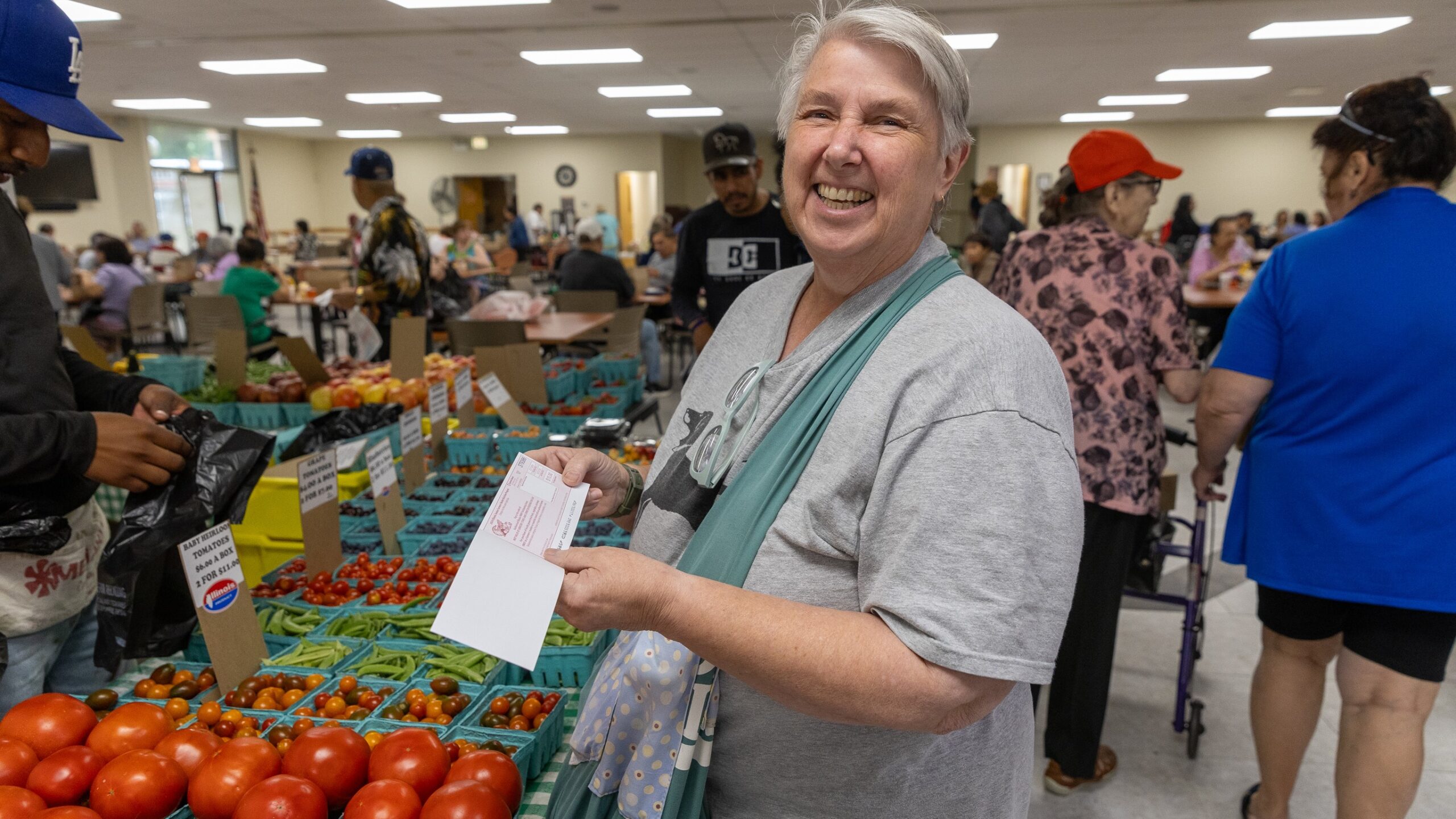
Hermosa resident Julio Vasquez has certainly felt that strain. First, the pandemic brought everything to a halt, then decimated the restaurant industry, where he worked for 38 years before his retirement. Next, food prices and inflation soared, making it difficult to survive on his fixed income.
“With grocery prices going up and other bills to pay, it’s hard to afford everything,” Vasquez said as he shopped for groceries at New Hope Bible Church’s food pantry. “That’s why this pantry is so important. It offers good help.”
Vasquez represents one of more than 1,500 households who visit the Hermosa food pantry each month. When the pantry first opened its doors in September 2023, they saw about 100 guests each week. Their attendance grew fast, mirroring the increase partners throughout the Food Depository’s network have seen.
“With grocery prices going up and other bills to pay, it’s hard to afford everything.”
Julio Vasquez, New Hope Bible Church food pantry guest
While our network of partner food programs welcomed many first-time pantry guests, they also served many of the asylum-seeking new arrivals in our communities. From May 2023 until January 2024, the Food Depository provided meals for the new neighbors staying in city-run emergency shelters. In recent months, we have provided meals at two State of Illinois operated shelters. We offered additional food and resources to our network partners as the newly arrived individuals moved into neighborhoods throughout the city.
The elevated need for food also coincided with food sourcing challenges compounded by recent supply chain issues, inflation and high food prices. In FY2024, the Food Depository spent approximately $38 million on food purchasing to maintain our local response to hunger – double of what we spent in FY2019 before the pandemic.
While donated food is gradually returning to pre-pandemic and pre-inflation levels, our need to purchase more food is also driven by a decrease in the amount of government food we receive as pandemic-era assistance programs have expired. In FY2021, 57 percent of the Food Depository’s food came from the United States Department of Agriculture (USDA) and the federal Coronavirus Food Assistance Program (CFAP). That number dropped to 28 percent in FY2022 when CFAP expired, creating a significant shortfall in food resources. In FY2024, government food remained at 28 percent of our food.
Thanks to the generosity of our donors, the Food Depository made up for the shortfall by purchasing more food with donated funds. We continue to leverage our partnerships and buying power as a food bank to make every dollar entrusted to us stretch. The contributions of our supporters are vital as we continue to help our neighbors.
The Food Depository has responded to rising needs by partnering with new food pantries, like the one at New Hope Bible Church. We have also helped our existing partners increase their reach and efficiency through strategic investments for expansion or the purchase of items such as freezers, shelving units and grocery carts. All of this work is possible because of our supporters.
Hattie B. Williams food pantry in south suburban Oak Forest was devastated by a storm in 2019. A mix of private, government and Food Depository funding enabled the pantry to expand, growing over nine times in size from their original site to better meet the needs of the neighbors seeking support. They celebrated their official reopening in the fall of 2023.
The new facility provides greater choice and dignity for guests while also increasing the staff’s efficiency in serving neighbors who visit the pantry. On average, Hattie B. serves 775 households a month, many from nearby communities with some of the highest food insecurity rates in the Chicago area.
This past spring the Food Depository secured three refrigerated vans for our partner pantries, enabling these sites to rescue quality, unsold food at local grocery stores to supplement the food they receive from the Food Depository.
Rev. Melody Seaton at Grace UCC said the van they received for food rescue has allowed them to provide thousands of pounds of additional food for their guests. “Food Rescue allows us to give families sometimes enough food for a week,” she said. “Smiling faces have increased tremendously!”